Understanding the Bangsar Hill Park Condominium Maintenance Fee and Associated Costs
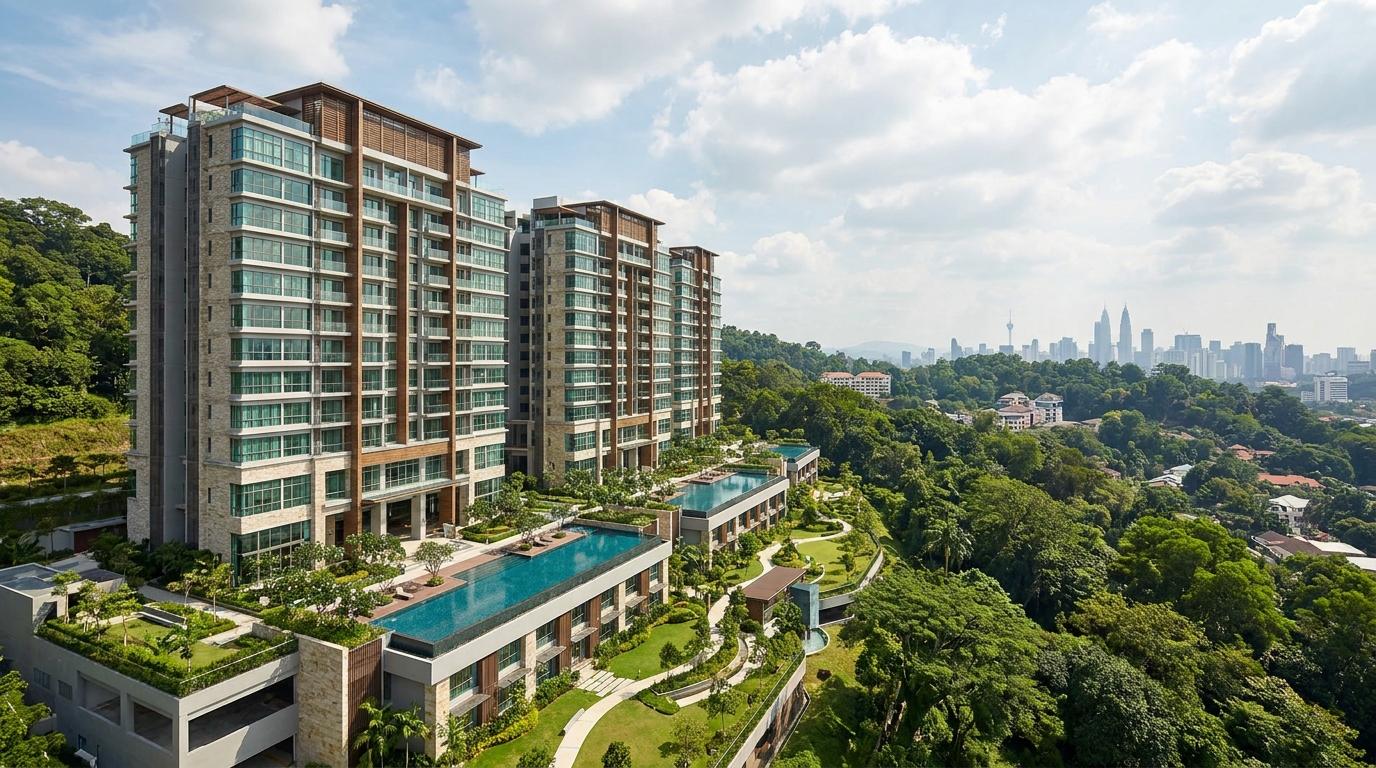
The maintenance fee for Bangsar Hill Park Condominium is a crucial recurring expense for property owners, directly contributing to the upkeep and enhancement of this prestigious development. This fee typically covers the operational costs of common areas, facilities management, and contributions to a sinking fund, ensuring the long-term value and liveability of your investment. For any prospective buyer or tenant, understanding the intricacies of these charges is paramount for accurate financial planning.
When considering a property at Bangsar Hill Park, it's essential to look beyond the purchase price and factor in these ongoing costs. The maintenance fee specifically varies based on the size of your unit and the extensive range of amenities provided within the development, reflecting the premium lifestyle and comprehensive services offered to residents. Shermaine Foong, REN 76742, is well-versed in these details and can provide specific insights tailored to your property interest.
Deconstructing the Bangsar Hill Park Condominium Maintenance Fee Structure
The maintenance fee at Bangsar Hill Park is more than just a monthly bill; it's an investment in the quality of your living environment and the preservation of your property's value. This consolidated charge covers a wide array of services and operational expenses that ensure the condominium remains a desirable and well-functioning community.
What Exactly Does the Maintenance Fee Cover?
Typically, the maintenance fee encompasses common area upkeep (cleaning, landscaping, general maintenance of lobbies, corridors, gardens, pools, gyms, play areas), 24-hour security services (personnel, CCTV, access control), utilities for common areas (electricity and water for shared facilities, lifts, pumps), facilities management (day-to-day operation, repairs, servicing of equipment), building insurance (master policy for the structure), and administrative costs (management staff salaries, office supplies, professional fees).
The Role of the Sinking Fund
Distinct from the regular maintenance fee, the sinking fund is a critical component for long-term capital expenditures. While maintenance fees cover routine operational costs, the sinking fund is specifically earmarked for major repairs, replacements, or upgrades to the building's infrastructure or common facilities. This includes projects like repainting the building exterior, upgrading lift systems, or renovating the swimming pool. It acts as a reserve, ensuring the Management Corporation has funds for costly projects without levying large, one-off special contributions. The sinking fund is usually calculated as a percentage of the maintenance fee, and its healthy balance indicates the building's long-term financial stability.
How Maintenance Fees are Calculated and Factors Influencing Them
The maintenance fee for a condominium like Bangsar Hill Park is typically calculated on a 'per square foot' basis, meaning larger units incur higher charges. The overall fee structure is influenced by the number of units (potentially economies of scale), the range and quality of facilities (extensive amenities mean higher operational costs), the age of the development (older buildings may require more repairs), and management efficiency (optimizing spending and preventive maintenance can control costs).
To verify the current maintenance fee for a specific unit at Bangsar Hill Park, refer to the Sales and Purchase Agreement (SPA) or contact the property management office. Alternatively, Shermaine Foong, REN 76742, can assist you in obtaining the most up-to-date information for your prospective unit.
Beyond Maintenance: Other Crucial Costs of Owning a Condominium in Bangsar Hill Park
While the maintenance fee is a significant recurring cost, it's just one piece of the financial puzzle when owning a premium condominium in Bangsar. Prospective owners must also budget for several other charges, both recurring and one-off, to gain a complete picture of their financial commitments.
Annual Government Charges
- Quit Rent (Cukai Tanah): An annual tax levied by the State Government on all alienated land, usually collected by the Management Corporation for strata properties.
- Assessment Rates (Cukai Pintu): An annual tax levied by the local authority (DBKL for Kuala Lumpur) on properties to fund local services, based on the annual rental value of the property.
Individual Unit Utility Bills
Unlike common area utilities, individual unit consumption is billed directly to the owner/tenant:
- Electricity: Billed by Tenaga Nasional Berhad (TNB).
- Water: Billed by Pengurusan Air Selangor Sdn Bhd (Air Selangor).
- Internet & Cable TV: Services from providers like TM Unifi, Maxis Fibre, or Astro.
- Gas (if applicable): For units with gas connections.
Insurance and Financing Related Costs
- Fire Insurance (Individual Policy): While the Management Corporation has a master policy for the building structure, owners might consider separate policies for their unit's contents and renovations.
- Mortgage Reducing Term Assurance (MRTA) / Mortgage Level Term Assurance (MLTA): Life insurance policies that cover the outstanding home loan in the event of death or total permanent disability, highly recommended for homeowners with mortgages.
- Loan Interest: The primary cost associated with a home loan.
Initial and Occasional Costs
- Legal Fees & Stamp Duty: Incurred during the property purchase process, covering the Sales and Purchase Agreement, loan agreement, and memorandum of transfer. These are significant one-off costs.
- Renovation & Furnishing: Depending on the unit's condition, initial costs for interior design, furniture, and appliances can be substantial.
- Real Property Gains Tax (RPGT): Applicable if you sell the property within a certain timeframe and make a profit.
- Agent Fees: If you engage a property agent like Shermaine Foong, REN 76742, for buying, selling, or renting, their professional fees will apply, usually a percentage of the transaction value or a fixed fee.
Cost Comparison: Recurring vs. One-Off Expenses
To help you budget effectively, here's a simple categorisation:
- Recurring Monthly/Annually:
- Maintenance Fee & Sinking Fund
- Quit Rent (Annually)
- Assessment Rates (Annually)
- Electricity, Water, Internet/Cable TV Bills
- Loan Interest & MRTA/MLTA Premiums (if applicable)
- One-Off/Occasional:
- Legal Fees & Stamp Duty (Purchase)
- Renovation & Furnishing Costs
- Real Property Gains Tax (Sale)
- Property Agent Fees (Purchase/Sale/Rental)
The Impact of Maintenance Fees on Property Value and Rental Yields in Bangsar
The maintenance fee, while a cost, is also a critical factor influencing both the long-term property value and potential rental yields of a condominium like Bangsar Hill Park. Savvy buyers and investors understand that a well-managed property, supported by appropriate fees, offers significant advantages.
Buyer's Perspective: Value and Desirability
From a buyer's standpoint, a transparent and reasonably structured maintenance fee is a sign of good governance and a commitment to maintaining high standards. Properties with well-maintained facilities, clean common areas, and robust security (all funded by maintenance fees) are inherently more attractive. Buyers are often willing to pay a premium for a hassle-free living experience in a well-managed development, directly impacting the resale value of units in Bangsar Hill Park.
Tenant's Perspective: Influencing Rental Prices
While tenants typically do not directly pay the maintenance fee, the quality of facilities and management directly influences the rental price and demand. A condominium with pristine swimming pools, a state-of-the-art gym, reliable security, and beautifully landscaped gardens, all funded by the maintenance fee, can command higher rental rates. Landlords investing in Bangsar Hill Park should view the maintenance fee as a necessary expenditure that helps secure a better class of tenant and potentially higher rental yields.
Investment Considerations: Net Rental Yield
For investors, calculating the net rental yield is crucial. This involves deducting all recurring costs, including the maintenance fee, from the gross rental income. A property with a high gross rental income but also very high maintenance fees might result in a lower net yield. It's a balance between premium facilities attracting higher rents and their associated operational costs. Shermaine Foong, REN 76742, can help investors analyze these figures to make informed decisions about potential returns at Bangsar Hill Park.
Navigating the Purchase or Rental Process: What to Check Regarding Fees
Whether you're looking to purchase a unit or rent one at Bangsar Hill Park, a thorough understanding of the fees and charges is non-negotiable. Due diligence can save you from unexpected financial burdens and ensure a smooth transaction.
Essential Due Diligence for Buyers
- Request Management Accounts and Financial Statements: Review the Management Corporation's (MC) or Joint Management Body's (JMB) financial records for transparency, a healthy sinking fund balance, and no significant outstanding debts.
- Review Minutes of Annual General Meetings (AGMs): These documents provide insights into past issues, future plans, proposed fee increases, and major decisions affecting the property.
- Scrutinize the Sales & Purchase Agreement (SPA): Ensure the SPA clearly stipulates the current maintenance fee, sinking fund contribution, and any other charges payable by the owner.
- Check for Arrears: Always ensure the current owner has no outstanding maintenance fee arrears, as unpaid sums can transfer to the new owner.
Understanding Fees in a Tenancy Agreement
For tenants, the maintenance fee is typically the landlord's responsibility. However, costs for specific facilities requiring booking or usage fees might be passed on to the tenant if agreed upon. Always clarify these points with your landlord or agent, like Shermaine Foong REN 76742, before signing. The tenancy agreement should clearly outline all payable charges.
Common Mistakes to Avoid
- Not Budgeting for Recurring Costs: Overlooking the significant impact of ongoing maintenance fees, quit rent, and assessment rates.
- Assuming Fees Are Fixed: Maintenance fees can and often do increase. Always factor in potential increases.
- Ignoring the Sinking Fund Status: A depleted sinking fund can lead to large, unexpected special levies for major repairs.
- Failing to Understand the Rules: Familiarize yourself with the condominium's house rules and by-laws to avoid fines or disputes.
Transport and Access Considerations for Bangsar Hill Park
The location of Bangsar Hill Park significantly contributes to its appeal and, indirectly, the justification for its maintenance fees. Residents benefit from excellent connectivity:
- Public Transport: The development is strategically located with good access to public transportation. The RapidKL LRT Bangsar station is within reasonable proximity, offering convenient access to KL Sentral and the city centre. The KTM Mid Valley station is also accessible.
- Road Networks: Bangsar Hill Park enjoys superb connectivity to major highways such as the Federal Highway, New Pantai Expressway (NPE), and SPRINT Highway, allowing efficient travel across the Klang Valley.
This robust transport infrastructure reduces reliance on private vehicles, potentially saving on fuel, tolls, and parking costs, which can indirectly offset some of the property's recurring expenses.
Legal Framework and Governance of Condominium Management in Malaysia
The management and financial aspects of strata properties like Bangsar Hill Park Condominium are governed by a comprehensive legal framework in Malaysia, primarily the Strata Management Act 2013 (SMA 2013) and its subsidiary regulations, the Strata Management (Maintenance and Management) Regulations 2015.
Joint Management Body (JMB) and Management Corporation (MC)
Initially, a Joint Management Body (JMB) is established, comprising the developer and purchasers, to manage common property. Once strata titles are issued and transferred, the JMB is replaced by a Management Corporation (MC), consisting of all strata title owners. Both bodies are tasked with collecting maintenance fees and sinking fund contributions, enforcing by-laws, and ensuring the financial health of the development.
The Role of the Commissioner of Buildings (COB)
The Commissioner of Buildings (COB), usually an officer from the local authority (DBKL for Bangsar), plays a vital oversight role. The COB acts as an adjudicator for disputes, monitors the financial health of strata schemes, and ensures compliance with the SMA 2013. Owners can lodge complaints with the COB regarding management or financial irregularities.
For more detailed information on property valuation and related regulations, resources such as the Board of Valuers, Appraisers, Estate Agents and Property Managers (BOVAEP) website can be highly informative.
Importance of Attending AGMs and EGMs
Active participation in Annual General Meetings (AGMs) and Extraordinary General Meetings (EGMs) is crucial for every owner. These meetings are where decisions are made regarding the budget, maintenance fees, sinking fund contributions, election of council members, and proposed major works. Attending allows you to stay informed, voice concerns, and vote on matters that directly affect your property and financial outlay.
Frequently asked questions
Is the maintenance fee for Bangsar Hill Park Condominium negotiable?
No, the maintenance fee is generally not negotiable on an individual basis. It is set by the Management Corporation (MC) or Joint Management Body (JMB) based on collective operational costs and approved by owners at an Annual General Meeting (AGM). All owners are bound by the agreed-upon rates.
What happens if I don't pay my maintenance fee?
Failure to pay maintenance fees can lead to serious consequences, including late payment charges, suspension of access to common facilities, legal action, and potential liens on your property. The Management Corporation has legal recourse under the Strata Management Act 2013 to recover arrears.
How often do maintenance fees increase?
Maintenance fees can increase periodically due to rising operational costs, inflation, or the need for enhanced services or major repairs. Any proposed increase must be approved by owners at an Annual General Meeting (AGM) or Extraordinary General Meeting (EGM) and adhere to the Strata Management Act 2013.
Does the maintenance fee include utilities for my unit?
No, the maintenance fee covers utilities for common areas only, such as lighting in corridors, power for lifts, and water for common facilities. Individual unit utility consumption for electricity, water, and internet is billed separately by the respective service providers.
Who sets the maintenance fee for Bangsar Hill Park?
The maintenance fee is proposed by the Management Committee (for MC) or Joint Management Committee (for JMB) and then approved by a majority vote of owners at an Annual General Meeting. This ensures that owners have a say in the financial management of their development.
How can I check the financial health of the management body?
You can assess the financial health by reviewing the audited financial statements and annual budgets of the Management Corporation or Joint Management Body. These documents, usually made available to owners before AGMs, provide insights into income, expenditure, and the status of the sinking fund. You can also contact Shermaine Foong, REN 76742, for assistance in understanding these aspects.