Plaza Damansara Utama: A Practical Guide for Buyers and Tenants
Plaza Damansara Utama: A Practical Guide for Buyers and Tenants
Plaza Damansara Utama is a low-rise shop-office address inside the SS21 Damansara Utama commercial belt in Petaling Jaya, and the short answer for anyone searching it is this: you are buying or renting the catchment, the frontage and the parking — not the building. The stock here is mature, and unit
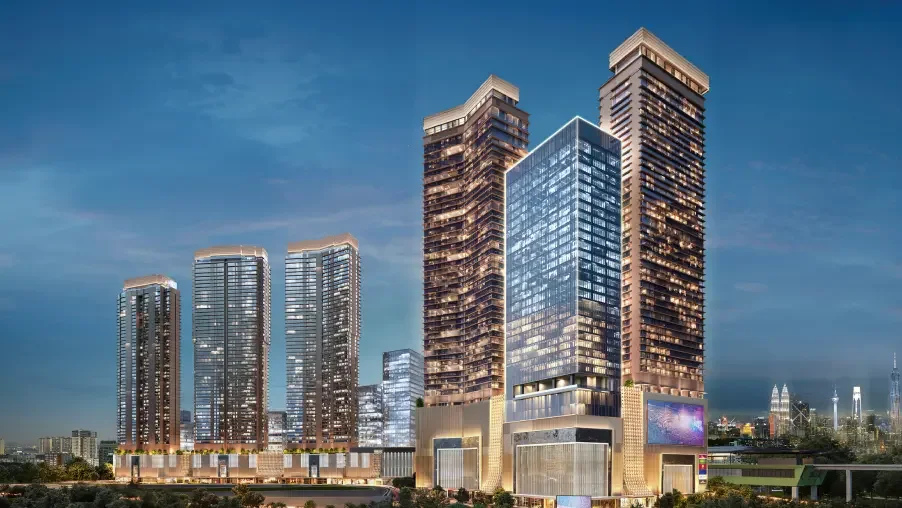
Plaza Damansara Utama is a low-rise shop-office address inside the SS21 Damansara Utama commercial belt in Petaling Jaya, and the short answer for anyone searching it is this: you are buying or renting the catchment, the frontage and the parking — not the building. The stock here is mature, and units differ sharply in condition, layout, title and approved use, so the value of any deal is decided at the unit level rather than by the name on the signboard.
This guide sets out what to check, how the buying and renting processes actually run, what pushes prices and rents up or down, and the mistakes that cost people money in this specific neighbourhood.
Where Plaza Damansara Utama sits, and who it serves
The address falls within Damansara Utama, postcode 47400 Petaling Jaya, administered by Petaling Jaya City Council (MBPJ). The commercial rows sit at the centre of a township that is bounded roughly by Damansara Jaya (SS22) and SS2 to the south, Bandar Utama to the west, and Taman Tun Dr Ismail and Bukit Kiara across the Kuala Lumpur border. That geography is the entire investment case: you are inside a mature, densely built-up area surrounded by landed housing and established condominiums, not a new township waiting for demand to arrive.
What the units are actually like
Expect three- and four-storey shop-offices of mixed vintage. Ground floors typically run retail or F&B; first floors hold clinics, dental practices, salons and professional offices; upper floors are used for tuition centres, showrooms, studios and back-office space. Some blocks are properly stratified with individual titles and an active management corporation, while older rows are managed far less formally. Floor plates, ceiling height, lift access, whether there is a mezzanine, and whether the unit has three-phase power all vary — which is why two shops on the same street can command very different rents.
The catchment that pays the rent
Damansara Utama and its immediate surrounds are an established, comparatively affluent family catchment. That supports clinics, tuition centres, cafés, bakeries, grooming and convenience retail with repeat local trade rather than tourist footfall. If your business model depends on walk-in strangers or heavy evening foot traffic, be honest about whether this location delivers it — the trade here is loyal but routine-driven, and lunch and after-school hours matter more than late-night volume.
Access, public transport and parking
Driving and road access
The area connects to the Lebuhraya Damansara-Puchong (LDP), the SPRINT network via the Penchala and Kerinchi links, and Jalan Damansara. Access is genuinely good outside peak hours — and genuinely painful during them. Before committing, drive the route you would actually use at 8.30am and again at 6.30pm, from both directions, because a location that looks five minutes away on a map can be twenty minutes in school-run traffic.
Public transport reality check
There is no rail station within comfortable walking distance of the shop rows. The closest MRT Kajang Line stations are Phileo Damansara and Bandar Utama, both a short drive or feeder-bus ride away rather than a stroll. If staff or customers will depend on public transport, verify current feeder bus routes and frequencies directly with Rapid KL before you assume connectivity, and test the walk yourself in the rain.
Parking and loading
Parking is the single most common operational complaint in this belt. Check how many bays are allocated to the unit, whether they are strata-titled or merely licensed, whether season parking is available from the management corporation, and where MBPJ coupon zones begin and end. For F&B or retail, confirm there is a legal loading area — a shop that cannot be serviced without double-parking will lose customers and attract complaints.
What drives price and rent here
Within a few hundred metres, pricing differences are driven by factors that have nothing to do with the postcode:
- Frontage and visibility — a lot facing the main flow of traffic and pedestrians commands a clear premium over a rear or inner lot, and resists vacancy better.
- Ground floor versus upper floor — the rent gap is substantial; upper floors only work for destination trades such as tuition, clinics or offices where customers arrive with intent.
- Corner and end lots — double frontage, more natural light and easier signage approval.
- Technical fit — three-phase power, water tank capacity, grease trap provision, exhaust routing, ceiling height and floor loading. Retrofitting these is expensive and sometimes impossible.
- Condition and renovation — a unit fitted out two tenants ago is not the same product as a bare shell, and neither is priced the same.
- Tenure and title — freehold versus leasehold, remaining lease term, strata versus individual title, and whether the approved use matches what you intend to do.
- Management quality — lifts that work, drains that flow, cleaners who turn up and a corporation that collects service charges properly all show up in the rent a tenant will accept.
Buying a unit: process, documents and costs
The sequence for a subsale purchase is straightforward but unforgiving of shortcuts. Define your intended use and budget first, then verify the agent's registration, then obtain the title particulars and a land search, then confirm with MBPJ that your intended use is permitted, and only then make an offer. Offers are typically backed by an earnest deposit of 2–3% of price, with the sale and purchase agreement signed within about fourteen days and the balance of the 10% deposit paid on signing. Completion for a subsale with an existing title is conventionally three months plus a one-month extension.
Financing is where commercial purchases differ most from residential ones. Banks generally apply tighter loan-to-value ratios, shorter maximum tenures and higher rates to commercial and shop-office property, and they will insist on their own valuation. Get a conditional approval before you pay anything you cannot afford to lose.
| Cost item | How it is usually calculated |
|---|---|
| Earnest deposit | 2–3% of the agreed price, offset against the 10% deposit on signing the SPA |
| Legal fees on the SPA | Scale fees under the Solicitors' Remuneration Order — broadly 1% of the first RM500,000, 0.8% of the next RM500,000, 0.7% thereafter, plus SST |
| Stamp duty on transfer | Tiered: 1% on the first RM100,000, 2% on the next RM400,000, 3% on the next RM500,000, 4% above RM1 million |
| Valuation fee | Governed by the Board of Valuers scale; required by the bank even when the price is already agreed |
| Agent commission | Negotiable — agree the figure in writing before you view, not after |
| Service charge and sinking fund | Monthly, apportioned by share units; check for arrears owing by the vendor |
| Quit rent and assessment | Annual, to the land office and MBPJ respectively; apportioned at completion |
| Utilities and fit-out | Deposits to TNB and Air Selangor, plus renovation, signage approval and business licensing |
Ask for a written cost estimate covering all of the above before you commit. For market context and transaction evidence, the Valuation and Property Services Department (JPPH) publishes property market reports that give you a benchmark beyond what any listing says. Gains on disposal also attract real property gains tax on a sliding scale tied to holding period, so get the current schedule from LHDN if you plan to sell within a few years.
Renting a unit: deposits, terms and negotiation
Commercial tenancy in this belt conventionally runs on three months' security deposit plus one month's advance rent, with separate utility deposits for water and electricity. Stamp duty on the agreement is nominal — roughly RM1 per RM250 of annual rent for a one-year term, higher for longer terms. Beyond that, nearly everything is negotiable: the term (two-plus-two and three-plus-two are common), the rent-free fit-out period, rent escalation on renewal, and who pays for what.
Pin these down in the agreement
- Who is responsible for structural repairs, roof leaks, air-conditioning servicing and grease trap cleaning.
- Whether service charge, quit rent and assessment sit with the landlord — they usually do, but confirm.
- Your reinstatement obligations at the end of the term, and whether the landlord wants the fit-out left in place.
- The renewal option and how the new rent is set — a fixed formula beats a vague "to be mutually agreed".
- Whether your intended business can actually be licensed at that address, checked with MBPJ before signing.
Common mistakes, and how the area compares
Most bad outcomes here trace back to the same handful of errors:
- Assuming the unit's approved use matches your business, and discovering otherwise after fit-out.
- Skipping a check on parking allocation and season parking availability.
- Not reading the management corporation's accounts, minutes and sinking fund position.
- Underestimating F&B conversion costs — grease trap, exhaust, power upgrade, signage approval.
- Failing to verify the negotiator's registration before handing over any money.
- Ignoring peak-hour access because the weekend drive felt easy.
- Signing a tenancy before securing financing or a business licence.
| Area | Character | Relative rent | Best suited to | Watch out for |
|---|---|---|---|---|
| Plaza Damansara Utama / SS21 | Mature local commercial belt, mixed shop-offices | Mid to upper-mid | Clinics, tuition, F&B serving residents, offices | Parking pressure, older building services, unit-level variation |
| Damansara Uptown core | Busier, more prominent retail and banking row | Premium | Brand-facing retail, banks, high-visibility F&B | Higher entry cost, tighter parking, more competition for the same customer |
| SS2 | Food-led, evening-heavy trade | Mid | Restaurants, hawker-style F&B, daily retail | Night traffic and congestion, parking enforcement |
| Damansara Kim | Smaller, quieter neighbourhood rows | Value to mid | Cafés, boutique services, local offices | Lower footfall, limited unit supply |
| TTDI | Established, strong F&B and office mix | Upper-mid to premium | Destination F&B, professional offices | Kuala Lumpur compliance and licensing differences |
Note that comparisons are qualitative: rent bands shift with unit condition, frontage and fit-out, so treat any figure you are quoted as a starting point to be tested against actual transaction evidence rather than an accepted fact.
Timing considerations
Allow roughly four to six weeks for loan approval and three-plus-one months to complete a subsale with an existing title; allow longer where consent, strata transfer or the vendor's loan discharge is involved. On the rental side, commercial landlords often want occupation within a month or two of signing, so line up your fit-out contractor and licence applications in parallel. F&B fit-out and MBPJ approvals can easily absorb two to three months before your first paying customer walks in — budget that runway into your cash flow, not just your renovation quote.
Frequently asked questions
Is Plaza Damansara Utama freehold?
Some lots are freehold and others leasehold, and the position can differ between phases and even between strata units on older schemes. Commission a land search at the Pejabat Tanah Petaling and read the title document before paying any deposit, because listing descriptions are not evidence. If the unit is leasehold, ask how many years remain — the remaining term affects both bank financing and resale.
Can I operate a café or restaurant in a unit here?
Only if the approved use, the building services and MBPJ licensing all allow it. F&B typically needs a grease trap, an exhaust route neighbours will accept, sufficient power and a premises-specific business licence, and some shop-offices cannot be retrofitted economically. Confirm with MBPJ and the management corporation before signing, and budget several months for fit-out and approvals.
How much deposit is normal for renting a shop lot?
The market convention for commercial space is about three months' security deposit plus one month's advance rent, with a separate utility deposit for the water and electricity accounts. Stamp duty on the tenancy agreement is nominal — roughly RM1 per RM250 of annual rent for a one-year term. Everything else, including rent-free fit-out periods and repair responsibilities, is negotiable and must be written into the agreement.
How long does a purchase take from offer to keys?
For a subsale unit that already has an individual or strata title, plan for roughly four to six weeks of loan processing and three months plus a one-month extension to complete. Where consent, a strata transfer or the vendor's loan discharge is required, allow more. Ask your solicitor for a written timeline instead of assuming the standard three-plus-one applies.
Is this a good investment?
That depends on the price you pay, the rent the unit can realistically hold, and how long it may sit vacant between tenants. Older commercial stock rewards buyers who can read a management account, a tenancy schedule and transaction evidence rather than a projected yield. Be sceptical of any return figure that assumes full occupancy from day one.
Do I need a registered agent?
You are not legally required to use one, but a registered estate agent with a valid REN number gives you a traceable person accountable for what is represented about the property. You can verify any negotiator's registration through the Board of Valuers, Appraisers, Estate Agents and Property Managers. Ask for the REN number in writing before you view.
If you are weighing up a purchase or a tenancy in Plaza Damansara Utama — or comparing it against Uptown, SS2 or TTDI — contact Shermaine Foong at Shermaine Property (REN 76742, shermaineproperty.com) to register your interest and get current availability, unit-level particulars and a written cost breakdown before you commit. 😊